Listen to this Blog
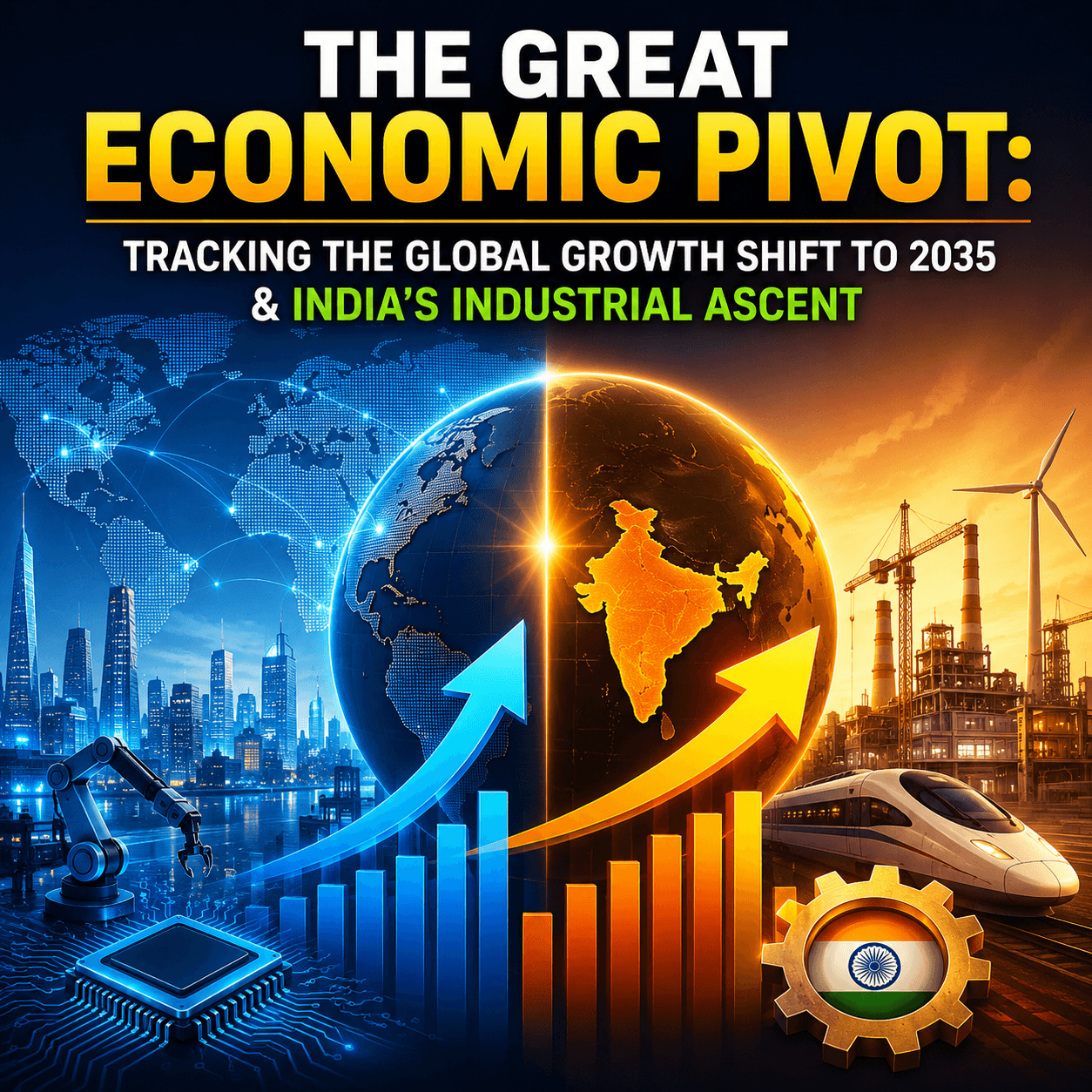
The Great Economic Pivot: Tracking the Global Growth Shift to 2035 & India’s Industrial Ascent
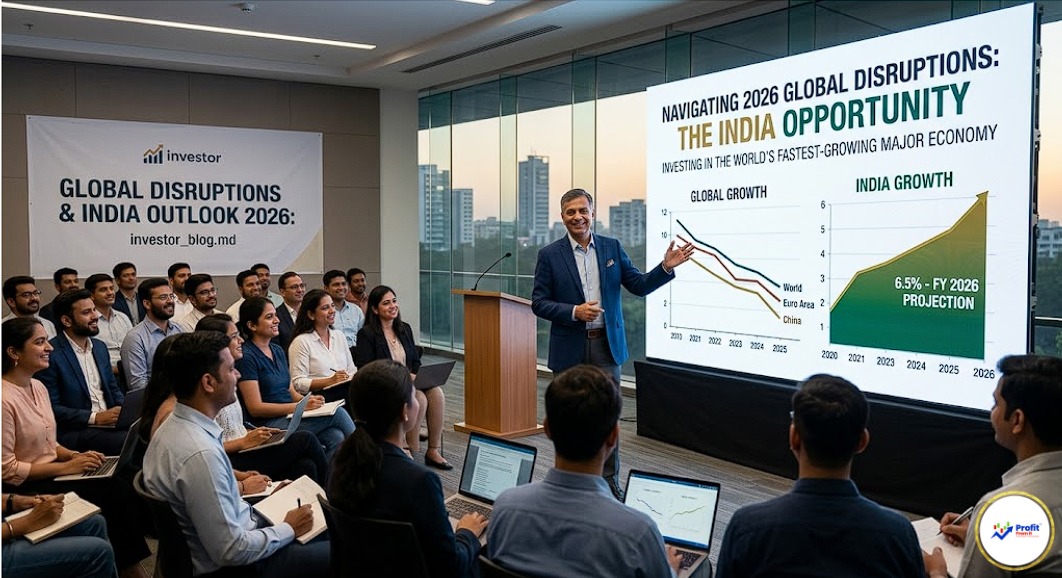
The global economic order is not just changing; it is fundamentally rewiring. For the last several decades, the investment narrative was dominated by Western markets and service-heavy economies. But as we move into the second half of this decade, a new multi-polar reality is emerging—one where the "East" is driving the global growth engine.
If you are an investor looking to navigate the next decade, you need to understand the structural shifts happening under the hood of the world’s major indices.
1. The Global Earnings Scorecard (Q1 2026 / Q4 FY26)
Before looking at the future, let’s look at the present. The performance in early 2026 shows a stark divide: while US tech titans are rallying on AI and operational efficiency, Asian markets are witnessing an explosion in profit growth driven by the semiconductor and AI infrastructure boom.
2. The Structural Shift: The Rise of "Industrials"
A common mistake investors make is relying on decade-old mental models. For years, the Indian market was synonymous with Information Technology. That has changed.
The current "Capex Supercycle" in India has vaulted Industrials and Capital Goods into the second-largest sector by market capitalization, trailing only Financial Services. This is not a temporary trend; it is the result of years of infrastructure policy reform, the "Make in India" initiative, and the massive manufacturing push.
Where is the Market Cap concentrated?
To understand where the money is going, look at the top sectors contributing to ~80% of index market weight:
S&P 500: Information Tech, Financials, Health Care, Consumer Discretionary.
Nasdaq 100: Information Tech, Communication Services, Consumer Discretionary.
Nifty 50: Financial Services, Industrials/Capital Goods, Consumption, Oil & Gas, IT.
DAX 40: Industrials, Technology, Financials, Consumer Discretionary.
Nikkei 225: Technology/Electronics, Industrials, Consumer Cyclicals, Financials.
Investor Takeaway: If your portfolio is still "tech-heavy" in India, you are missing the structural pivot toward physical infrastructure and manufacturing.
3. 2035: The PPP Difference
When experts talk about the world in 2035, you will often see two different numbers. It is critical to know why.
Nominal GDP: Measures current market value (used for trade and currency analysis).
GDP (PPP): Adjusts for the cost of living and local prices. This is the metric that matters for long-term growth. It captures the actual productive capacity of an economy.
The Global Hierarchy: Projected 2035 (PPP)
| Rank (2035) | Economy | Projected GDP (PPP) | The Core Narrative |
| 1 | China | ~$61.5 Trillion | AI infrastructure & manufacturing scale. |
| 2 | United States | ~$36.9 Trillion | Global innovation & high-margin services. |
| 3 | India | ~$31.6 Trillion | Demographic dividend & industrial capex. |
India’s ascent to the third spot by 2035 isn't just about growth; it’s about becoming a critical node in the global supply chain.
4. The Semiconductor Factor: Can India Bridge the Gap?
A frequent question is: "Can India catch up to the AI-driven success of Taiwan or South Korea?"
The answer is Yes, but differently. India is not playing the "copy-paste" game.
Assembly & Testing (ATMP/OSAT): This is the immediate growth engine. Projects like Micron and Tata’s facilities have already commenced commercial production in 2026, creating high-volume value.
Sovereign Design: India is shifting toward owning the IP for its specific needs—automotive, industrial, and digital infrastructure.
The Horizon: The 2028–2030 window marks the start of advanced silicon fabrication in India. This reduces import dependence and secures our industrial backbone.
Conclusion: The Smart Investor’s Path
The next decade belongs to the economies that can effectively transition from "Service consumption" to "Industrial production."
Stop ignoring the "Industrial" shift: Look for companies benefitting from the Capex supercycle, not just the ones selling software.
Think in PPP terms: Understand that the real growth in an economy often happens below the surface of currency fluctuations.
Invest in the cycle: Markets are pricing in India’s transition to the world's third-largest economy by 2035. The best time to be positioned is during the "building" phase, not after the completion.
Ready to align your portfolio with the 2035 growth cycle? Let’s discuss the specific sectors that offer the best risk-adjusted returns.


.jpg)