Listen to this Blog
The Sailor’s Secret: Why a Chief Investment Officer Actually Welcomes a Storm
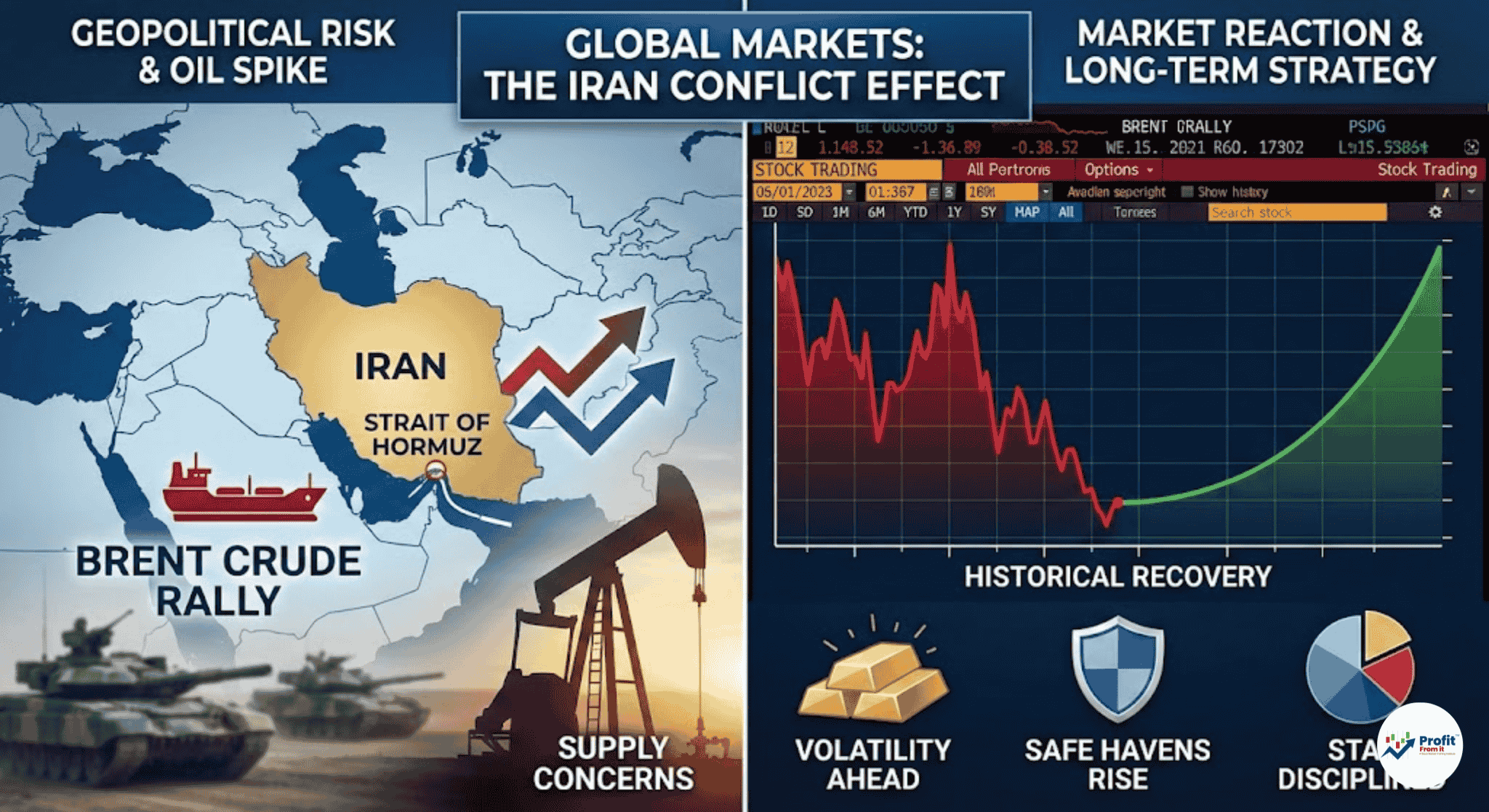
In the current climate, the headlines often read like a manual for systemic fragility. Whether it is the tension surrounding energy infrastructure in the Strait of Hormuz or the specter of geopolitical fragmentation, the modern investor lives in a state of perpetual cognitive dissonance. To the uninitiated, these "once-in-a-generation" crises—from pandemics to proxy wars—are signals to retreat, to seek the shelter of cash, and to wait for the clouds to part.
However, for Yves Bonzon, Group Chief Investment Officer at Julius Baer, this reflexive anxiety misses the fundamental mechanic of high-stakes wealth management. To a seasoned strategist, a crisis is not a detour from the plan; it is a clinical trial for an investor’s strategy. It is the only environment where true expertise is distilled from the dilution of sheer luck. While the amateur waits for the storm to pass, the master recognizes that the most profound opportunities for relative outperformance emerge only when the wind picks up.
To look beyond the immediate noise is to understand that navigating a crisis is less about the gift of prophecy and more about the discipline of the rational mind against the backdrop of global risk.
Takeaway 1: When the Sea is Quiet, Everyone is a Good Sailor
In a bull market, stability is a mask that grants the illusion of competence to the incompetent. When the tide of asset prices rises across the board, every portfolio manager looks like a genius. However, volatility acts as a merciless filter, stripping away the luck of the amateur to reveal the structural integrity of a professional approach.
Bonzon, a veteran of the 1987 crash, the 2008 collapse, and the COVID-19 pandemic, views these drawdowns not as failures, but as professional milestones.
"When the weather is beautiful and the sea is quiet, everybody is a good sailor. It's in rough times that you can make a difference."
This is the central tenet of the sailor’s secret: market drawdowns are not merely losses on a ledger; they are the moments when a CIO can actively mitigate systemic damage and re-position for a swifter recovery. It is an empowering perspective that transforms fear into a measurable advantage.
Takeaway 2: The Wildfire Logic of Systemic Failures
Effectively navigating a crisis requires a clinical diagnosis of the shock’s origin. Bonzon distinguishes between exogenous hits—unpredictable strikes from outside the system—and endogenous failures, which are "wildfires" born within the financial plumbing itself.
The 2008 Financial Crisis remains the definitive example of an endogenous disaster. It followed a predictable, if catastrophic, internal logic. The flaws in the securitization of subprime mortgages were visible to those with the right analytical lens. Bonzon recalls a striking detail of that era’s systemic failure: the very banks manufacturing the "junk" instruments were having their own treasury departments buy them. Because the manufacturing and treasury arms of these institutions existed in silos—often in different parts of the city—they failed to communicate. The manufacturer knew the "triple-A" rating was fake, but the treasury department bought the paper as a safe haven.
Understanding these mechanics allows an expert to use hard facts to anticipate a system's reaction:
Endogenous Shocks (e.g., 2008): Driven by internal flaws like "fake" triple-A ratings and siloed bank communications. These are highly "analyzable" as they follow the hard facts of balance sheet interconnectivity.
Exogenous Shocks (e.g., COVID-19, Iran War): Driven by external biological or political whims. These are nearly impossible to predict and require reacting to unpredictable policy decisions, such as global lockdowns or energy infrastructure shutdowns.
Takeaway 3: The Curse of Experience and the Druckenmiller Factor
While experience is a blessing, it can also manifest as a curse through "anchoring"—the belief that because you’ve seen the movie before, the ending is written. This leads to the "stigmatization" of certain assets based on past trauma.
Consider the "Magnificent Seven" stocks. Many veteran investors, scarred by the 2000 dot-com bust, wrongly dismissed these tech giants as a remake of the 1999 bubble. They failed to see that the underlying capital expenditures and fundamentals were fundamentally different. To avoid this trap, Bonzon advocates for "intuitive intelligence"—a trait he associates with the legendary Stanley Druckenmiller. It is the ability to balance decades of patterns with the realization that every crisis contains "unknown unknowns." Experience should provide the intuition to act, but never the rigidity to remain blind to new variables.
Takeaway 4: Emotional Hijacking and the Stone Age Brain
The greatest threat to a portfolio during a drawdown isn't the market—it's human biology. As Nobel laureate Daniel Kahneman demonstrated, our brains are programmed for Stone Age survival. When markets plummet, the "emotional brain" triggers a fight-or-flight response, hijacking the rational mind.
In modern capital markets, this prehistoric instinct is a liability. The rational brain understands that volatility is warranted, but the emotional brain sees a threat to life. The primary opportunity in a crisis is simply maintaining rationality while others succumb to emotional hijacking. The successful investor is the one who recognizes that their own brain is the enemy and exerts the discipline required to stay the course.
Takeaway 5: The "Stay Rich" Philosophy and the Relativity Rule
Wealth management for high-net-worth individuals is not an absolute race to the top; it is a mandate to "stay rich" relative to one’s peers and the cost of capital. Bonzon calls this the "Relativity Rule."
To maintain the purchasing power necessary for high-value assets—such as a specific villa in Tuscany—one must benchmark against the MSCI World index. If your portfolio lags significantly behind this index, you are effectively becoming poorer relative to the other "bidders" for that property, regardless of your nominal gains. This requires a "flexible" portfolio. Much like a ship designed to flex with the waves rather than resist them, a flexible strategy is physically more robust than a rigid one, allowing an investor to absorb the shock of a storm without snapping.
Takeaway 6: The Two-Decision Trap of Selling
The most expensive mistake an investor can make is falling into the "Two-Decision Trap." Driven by the Stone Age brain, an investor may find the "rational" excuse to exit a position during a crisis. However, market timing requires two perfect decisions: the exit and the re-entry.
Because the exit is usually driven by fear, the investor rarely receives the rational signal required to trigger the re-entry. Mathematically, the odds of getting both right are astronomical. Most sell at the nadir and wait until the recovery is fully priced in before returning, destroying the power of compounding.
"Most important is if you're wrong, not to stay wrong."
In this context, "being wrong" is an acceptable cost of doing business. It is the rigidity—the refusal to normalize risk once the climax of a crisis has passed—that proves fatal to long-term wealth.
Conclusion: The Discipline of the Sailor
Navigating a financial storm is ultimately an exercise in self-governance. True expertise is not the hubris of believing you can predict the next war or pandemic; it is the discipline to keep a steady hand on the tiller when the winds of the world change.
By educating yourself on the "dos and don'ts" of systemic risk and recognizing the internal conflict between your rational and emotional brains, you can transform a period of global fear into a period of measurable advantage. Managing a portfolio is not about seeing the future—it is about managing your own balance sheet and your own biases with a cold, clinical eye.
In the next market storm, will you be the sailor who panics, or the one who recognizes the wind is finally behind you?

.jpg)