Listen to this Blog
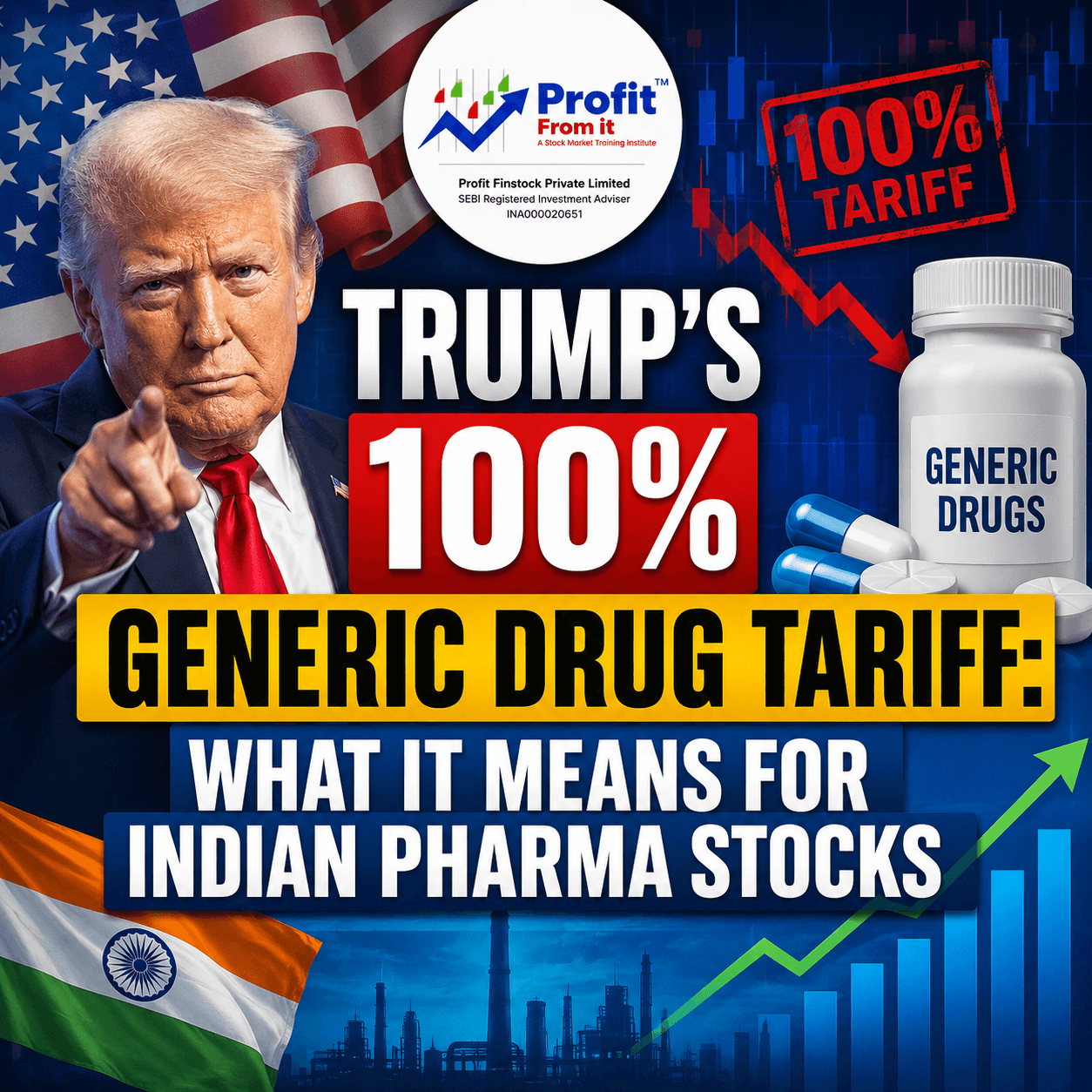
Trump’s 100% Generic Drug Tariff: What It Means for Indian Pharma Stocks
President Donald Trump recently announced a massive shift in U.S. trade policy aimed at reshoring pharmaceutical manufacturing. Starting August 1, 2026, the U.S. will grant a two-year tariff-free window for generic drugs. However, beginning August 2028, a 100% tariff will be applied to imported generic drugs, escalating to 200% in August 2029. With the U.S. accounting for a massive chunk of India's global exports, this policy shift will force a fundamental restructuring of how Indian pharma companies operate, pushing them to move manufacturing to American soil or face crippling margin pressure.
The Big Picture: India's Pharma Revenue Split
To understand the macro impact, it is crucial to see where the Indian pharmaceutical industry generates its cash flow. The industry is currently balanced between domestic consumption and international exports, but the export value is heavily concentrated in highly regulated markets.
When looking strictly at global exports, the United States is the undisputed heavyweight, highlighting why the new tariff policy is a critical event for the sector.
Company-Specific Impact: Who is Most Exposed?
Not all pharmaceutical companies share the same risk profile. The impact will be most severe on companies that derive a massive portion of their total revenue from U.S. generic sales without a matching U.S.-based manufacturing footprint.
Companies like Dr. Reddy's and Aurobindo face a ticking clock to either acquire U.S. manufacturing plants or absorb massive margin hits. Conversely, Cipla's strong Indian base provides a defensive cushion against international trade volatility.
The Ripple Effect: CDMOs and Divi’s Laboratories
Contract Development and Manufacturing Organizations (CDMOs) occupy a unique position. The 100% tariff explicitly targets finished generic drugs, meaning CDMOs working on patented, innovator molecules are largely insulated. However, CDMOs supplying Active Pharmaceutical Ingredients (APIs) for generics will face indirect pressure as their U.S. clients squeeze them for cost savings.
Divi’s Laboratories is a prime example of a company with a bifurcated risk profile:
Because Divi's generates the majority of its revenue—and its strongest margins—from Custom Synthesis for big pharma, its core profit engine remains protected from the generic tariffs.
Strategic Takeaways for Investors
When analyzing pharma stocks over the next 24 months, the traditional metrics of revenue growth and current EPS are no longer enough. Here is what to monitor moving forward:
CAPEX Announcements: Watch closely for management commentary on capital expenditure. Companies announcing land acquisition or factory builds in the U.S. are securing their future revenue, though this will cause short-term hits to free cash flow and profit margins.
M&A Activity: Expect a surge in Mergers and Acquisitions. Indian giants will likely try to buy struggling or mid-sized U.S. manufacturing facilities rather than building from scratch to beat the August 2028 deadline.
Margin Contraction: Operating margins for U.S.-heavy generic businesses will likely compress. Manufacturing in the U.S. involves significantly higher labor, compliance, and overhead costs compared to operating out of India.
Pivot to Specialty Drugs: Companies that have already started shifting their portfolio away from simple generics toward specialty, biosimilar, or innovative drugs (which are exempt from this specific tariff) will command a premium valuation in the broader market.

.jpg)