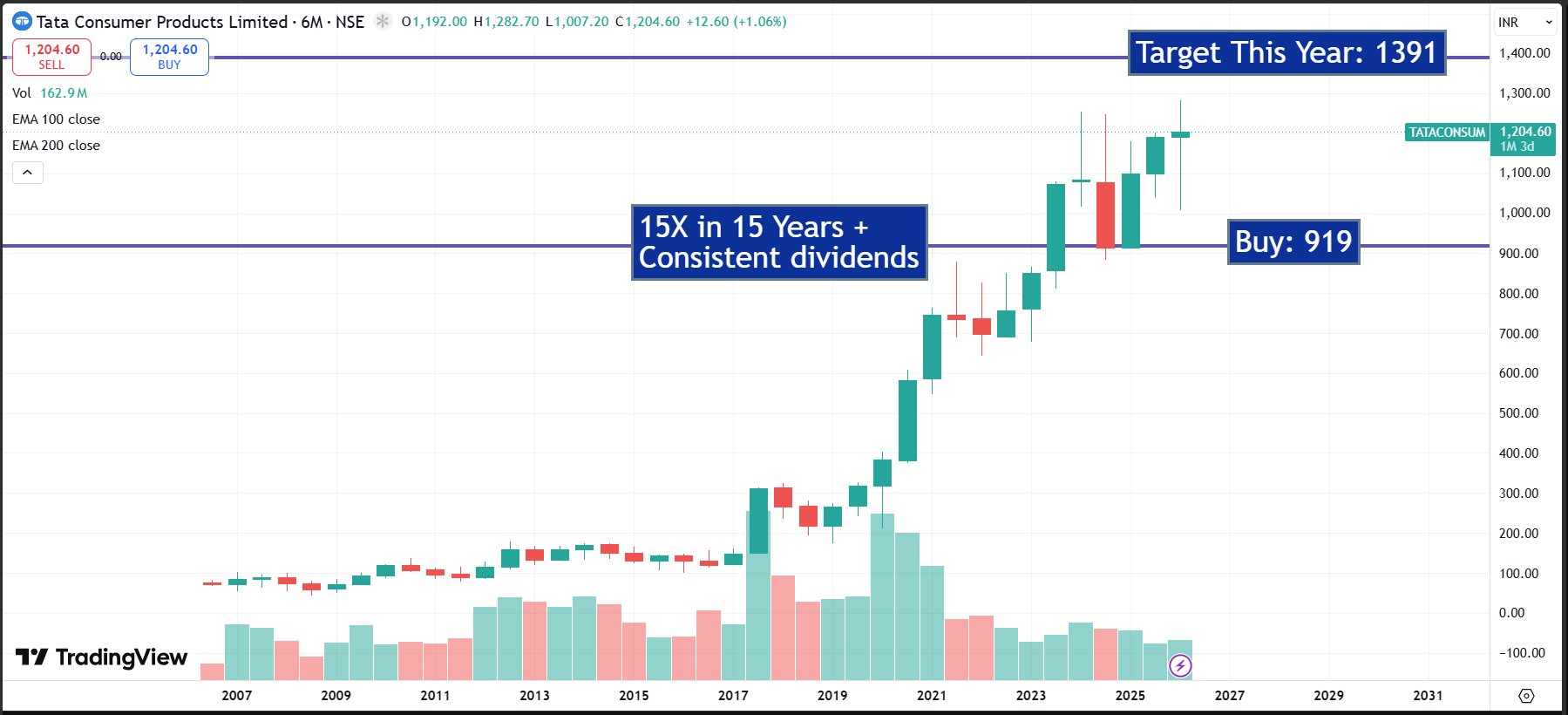
Tata Consumer Products Q4 FY26 Analysis: Robust Margin Expansion vs. International Geopolitical Headwinds
Quarterly Snapshot
The "Wow" Factor: Key Surprises
Growth Businesses Crossing the Rubicon: The "Growth" portfolio (Tata Sampann, Tata Soulfull, NourishCo, Capital Foods, Organic India) crossed the Rs. 4,000 Crore revenue milestone in FY26, now accounting for a massive 31% of the India business.
Tata Sampann's Breakout Quarter: A staggering 69% YoY revenue growth in Q4 for Tata Sampann, driven by a broad-based performance across pulses, dry fruits, and spices.
India Non-Branded Surges: The non-branded segment (solubles and plantations) delivered a massive 41% constant currency growth in Q4, significantly padding the consolidated top line.
Working Capital Efficiency: Consolidated net working capital days improved dramatically from 26 days to 21 days in FY26, with the India business operating at a negative 2 days.
Operational KPIs
Financial Deep Dive (Consolidated)
Note: Group Net Profit before exceptional items is derived based on the provided percentage growth.
Cost vs. Efficiency:
The standout feature of Q4 FY26 was the substantial EBITDA margin expansion of 100 bps to 14.6%. This was primarily driven by the tapering of tea cost inflation in India, which more than offset the coffee cost inflation seen in the International and Non-Branded businesses. The company executed price cuts in the India tea segment (resulting in a 1% revenue decline despite 4% volume growth) to pass on the benefit of lower commodity costs, thereby regaining margin equilibrium. However, the full-year EBITDA margin contracted slightly by 30 bps to 13.9% due to the lingering effects of high tea costs in H1 FY26 and elevated US coffee prices throughout the year. The firm's strict control over operating overheads, maintaining an A&P-to-sales ratio around the 6.7% mark for the year (5.9% in Q4), contributed to the healthy bottom line.
Management Integrity and Tone
Management's tone on the earnings call was highly confident and transparent.
Confidence in Strategy: CEO Sunil D'Souza emphatically reiterated the success of their "Growth" portfolio and the new Go-To-Market (GTM) split strategy, pointing to immediate improvements in execution metrics like "lines per outlet."
Transparency on Headwinds: Management directly addressed the slight softness in Capital Foods and the International export business, attributing it clearly to geopolitical shipping disruptions in the Middle East during March, rather than fundamental demand issues. They also acknowledged the minor dip in Nielsen tea market share but confidently explained it as an artifact of Nielsen not capturing modern trade and e-commerce channels accurately, where Tata is outperforming.
Pricing Discipline: Management demonstrated a clear focus on profitability over pure market share in volatile segments, explicitly stating they would rather lower margins to be where the consumer is (e-commerce) than chase unprofitable volume in traditional channels.
Peer Benchmarking
While specific peer data (like HUL or Nestle) wasn't explicitly debated on the call, Tata Consumer's performance highlights a strategic divergence. Their 4.5% innovation-to-sales ratio and rapid scaling of new brands (Sampann, Capital Foods) indicate a more aggressive, multi-category growth strategy compared to traditional FMCG players. The 16% Underlying Volume Growth in India is exceptionally strong in an environment where many peers are reporting flat or low single-digit volume growth.
Key Risks and Red Flags
Commodity Volatility (Coffee & Tea): While North Indian tea prices have softened, South Indian prices firmed up. More critically, global coffee prices (both Arabica and Robusta) remain volatile. Although they moderated in Q4, any resurgence in coffee costs could squeeze International margins, particularly for the Eight O'Clock brand in the US.
Geopolitical Supply Chain Disruptions: The Red Sea/Middle East tensions directly impacted the export revenues of Capital Foods and Organic India in March. Prolonged disruptions could affect raw material availability (though management claims to have mitigated this) and export momentum.
Intensifying Competition in Beverage: The aggressive push by Reliance's Campa (especially Campa Sure in the water segment) poses a potential long-term threat to NourishCo's growth trajectory, although management remains unfazed by "tactical pricing actions."
Margin Compression in International/Non-Branded: While India margins expanded, International EBITDA declined 6% (CC) and Non-Branded declined 29% (CC) in Q4, signaling pressure from input costs and the reversal of prior-year fair value benefits.
Shareholding Pattern Changes
No significant changes in the shareholding pattern were highlighted in the provided materials that warrant raising a red flag. The pattern remains relatively stable with Promoters at 34%, FIIs at 22%, and DIIs (MFs/Insurance) at 23%.
The Forward Curve
Management provided a confident outlook, guiding for continued double-digit top-line growth and EBITDA growth outpacing revenue.
Q1 FY27 Expectation: Expect a rebound in Capital Foods and Organic India exports as shipping disruptions ease. Margin expansion in the US coffee business is anticipated to lag slightly as high-cost inventory is flushed out, but should improve sequentially.
Q2 FY27 Expectation: The full benefits of the newly implemented Go-To-Market (GTM) restructuring (completed between Dec '25 and Feb '26) should clearly reflect in accelerated volume growth across the food portfolio, particularly for Sampann and Capital Foods.
Valuation Guardrails
With the stock trading at a CMP of Rs. 1205, Tata Consumer Products commands a premium valuation, characteristic of top-tier FMCG companies in India demonstrating high growth. Given the adjusted EPS of Rs. 17.30 for FY26, the trailing P/E is roughly 69x.
Verdict: Trading at a Premium. This premium is justified by their aggressive transformation from a tea/salt company to a diversified, high-growth FMCG powerhouse, their successful M&A integration, and industry-leading volume growth. However, the margin of safety is relatively thin at these multiples, requiring flawless execution on the "Growth" portfolio to sustain the valuation.
The Advisory Note: Strategic vs. Tactical Outlook
Strategic (Long-Term): Tata Consumer remains a core portfolio holding. The structural shift towards higher-margin, high-growth categories (Sampann, RTD, Capital Foods) is working. Their aggressive focus on e-commerce and innovation (4.5% of sales) positions them perfectly for the changing Indian consumer landscape. The long-term thesis of building a diversified F&B giant is firmly intact.
Tactical (Short-Term): The stock may see consolidation given the current high valuations and the minor near-term margin pressures in the international business. However, any significant dip due to broader market volatility or temporary commodity spikes should be viewed as a buying opportunity for long-term investors.
Financial Disclosure: This analysis is for informational purposes only and does not constitute financial advice. The analyst or firm may have positions in the discussed securities. Investors should conduct their own due diligence before making investment decisions.